
Last Updated on September 24, 2025
*This post may contain affiliate links. If you click and purchase, I may earn a small commission at no extra cost to you.
This past Labor Day weekend, my friends and I spent the holiday exploring Crater Lake National Park. Let me be the first to tell you the views are even more stunning in person than they are in pictures. We had a great time hiking around the rim and the neighboring peaks. We even swam in the lake! The deep blue water, the late summer air, and mountain views made for a great weekend getaway.
If you don’t already want to go, you will when you’re done reading this. I’m gonna tell you everything about my trip and what I wish I knew so that you can plan your own trip to Crater Lake National Park!
History of Crater Lake National Park
Crater Lake National Park was established in 1902 and was the fifth National Park established the United States.
Its history goes back much further though. Before it was the deep blue lake we know today, Crater Lake was a mountain called Mount Mazma. That changed roughly 7700 years ago when a volcanic eruption occurred causing the central portion to collapse in.
After the collapse a caldera formed with smaller volcanic vents appearing, creating what is today called Wizard Island. Over time, the Caldera filled with snow and rain to give us the lake we have today.
While Crater Lake was known to the native peoples in the area for ages, archaeological evidence shows they didn’t maintain settlements there, according to the National Park Service website.
In 1853 gold prospectors first mapped the lake, calling it Deep Blue Lake. The lake began to draw visitors and in 1886 William Gladstone Steel led a geological expedition, proving it was the deepest lake in the United States. In 1886 he began lobbying for it to become a National Park, and in 1902 Teddy Roosevelt signed the bill designating it a National Park.
How to Get To Crater Lake National Park
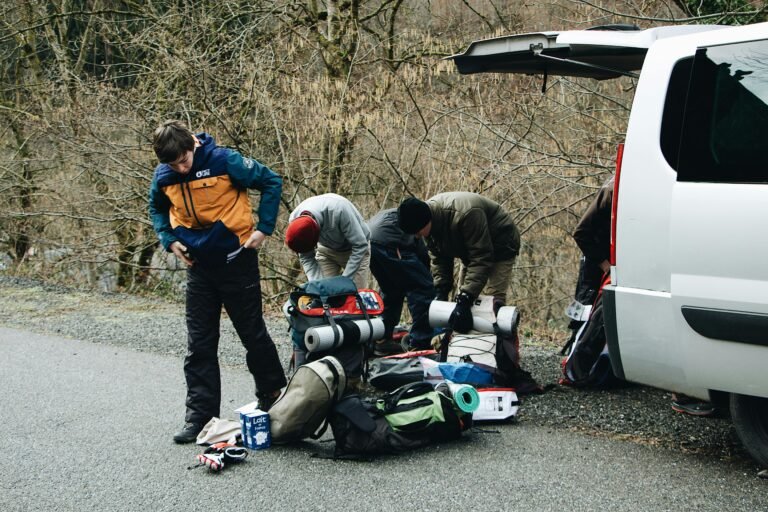
Since I am located in Texas I had to fly to Oregon. I flew with my buddy out of Austin into Portland. The next day we met up with the rest of our group and drove to Crater Lake. It took us about 5 hours, but we went a little out of our way to stop at the Blue Pool (it was SO blue).
If you are coming from Bend or Eugene it’s a much shorter ~2 hour drive.
Entering Crater Lake National Park
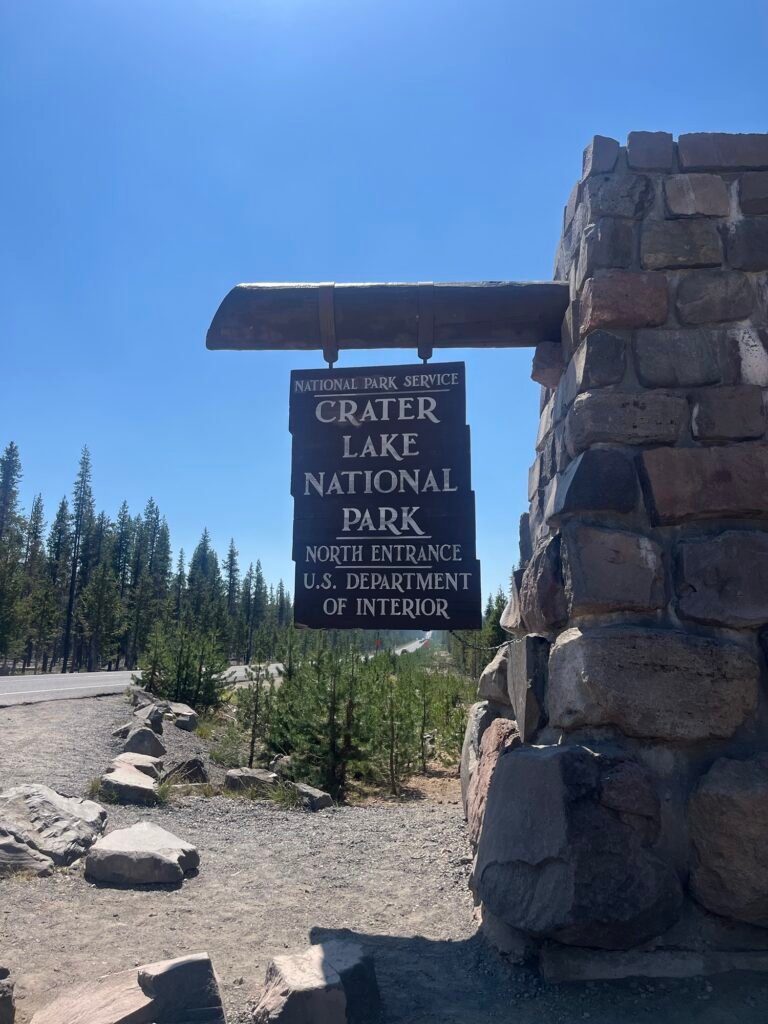
There is a North and South entrance to the park. Entry to the park is $30 dollars per car, and is good for 7 days. They accept credit card, debit card, and Samsung/Apple pay for entry. They do not accept cash.
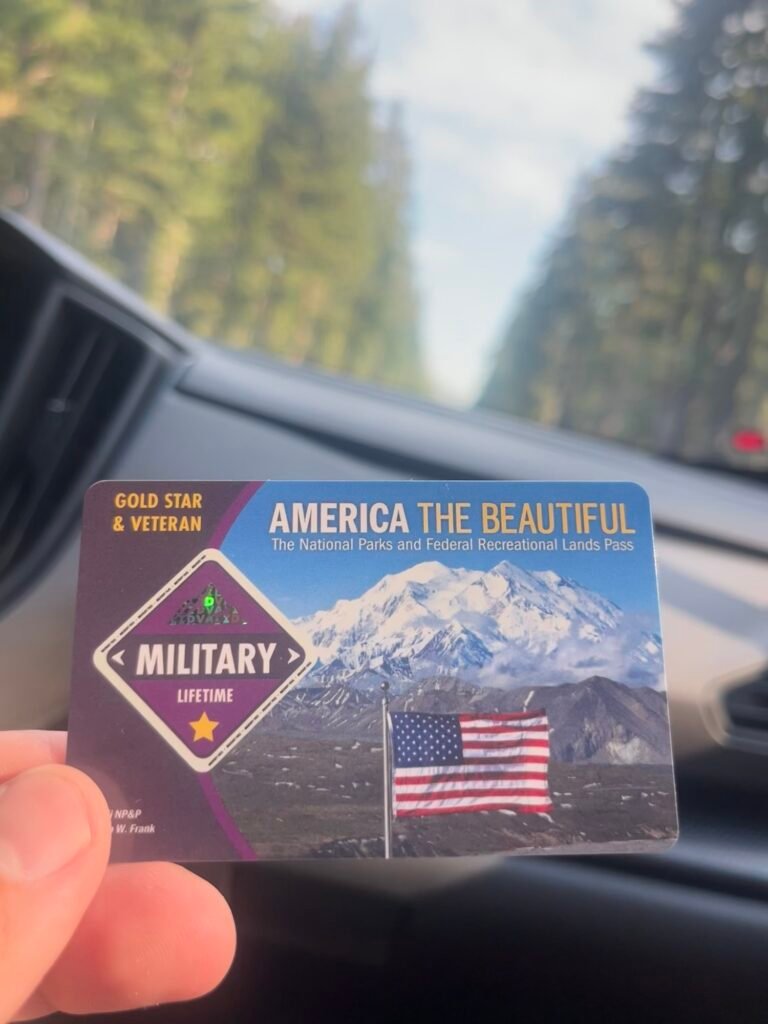
If you have an annual parks pass entry is free for your vehicle. I used my Veteran Lifetime National Parks for entry! They also sell annual passes at the park.
First Impressions
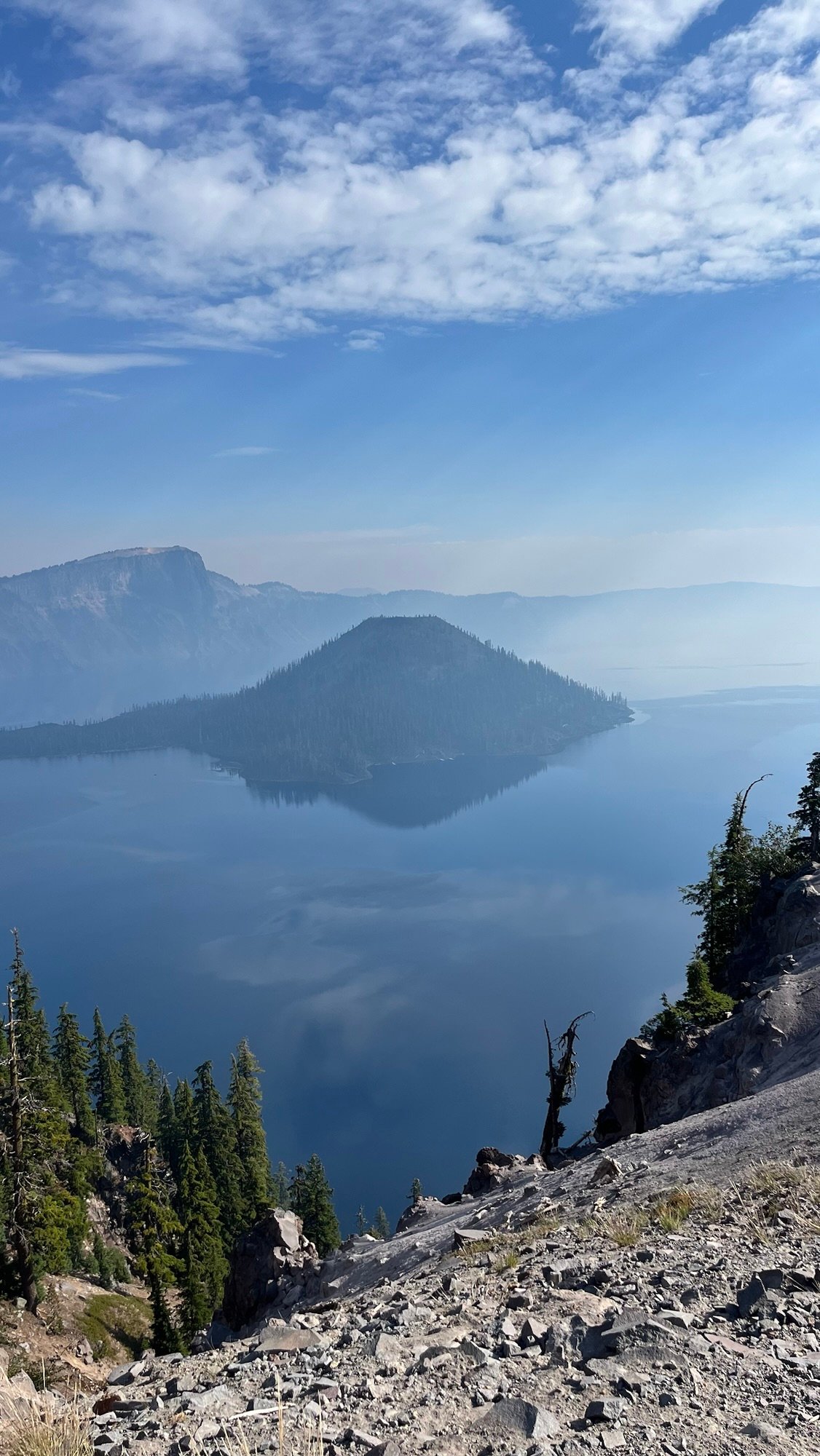
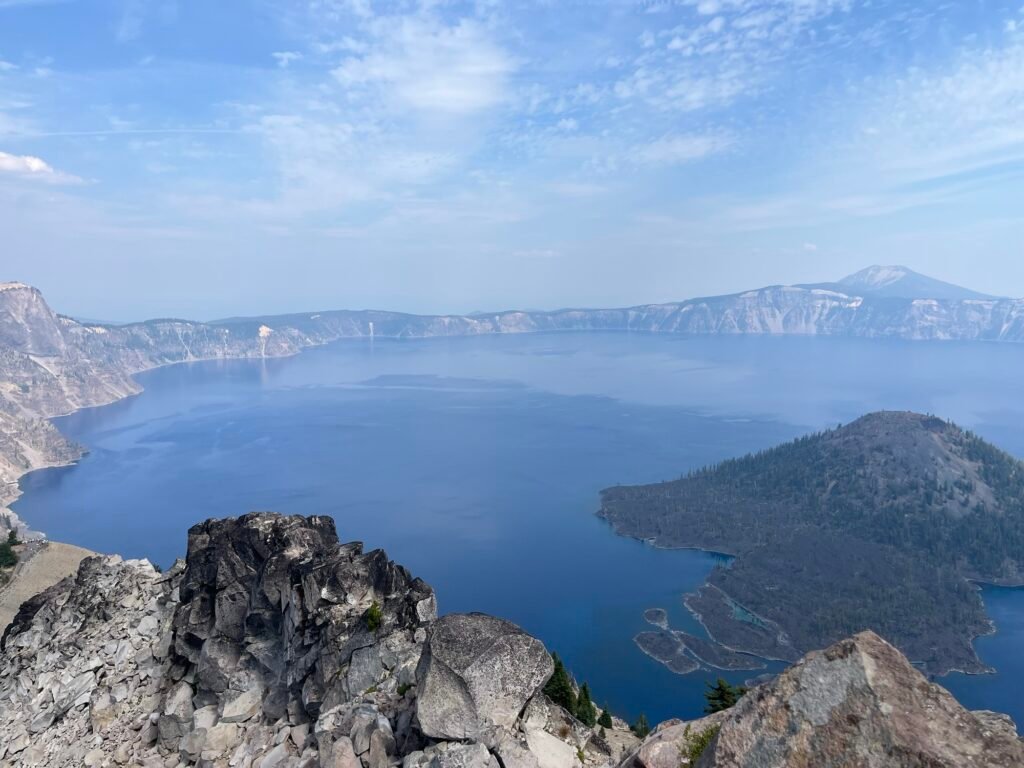
When you are first entering the park you are driving on some narrow winding roads. Eventually you reach Rim Village; just past that is the first overlook where you can look into the caldera and see the Crater Lake. Our first day in the park it was a little hazy due to some recent wildfires. It made for a spectacular view when we first saw the lake! The water was just so blue, with Wizard Island in the haze it almost didn’t seem real.
Hiking in Crater Lake National Park
We did a total of 4 hikes in the park that were a range of difficulty. Overall, I felt the park had a good variation of difficulty on the trails so there is something for everyone. If you are interested the National Park Service has a list of all the trails in the park.
Cleetwood Cove
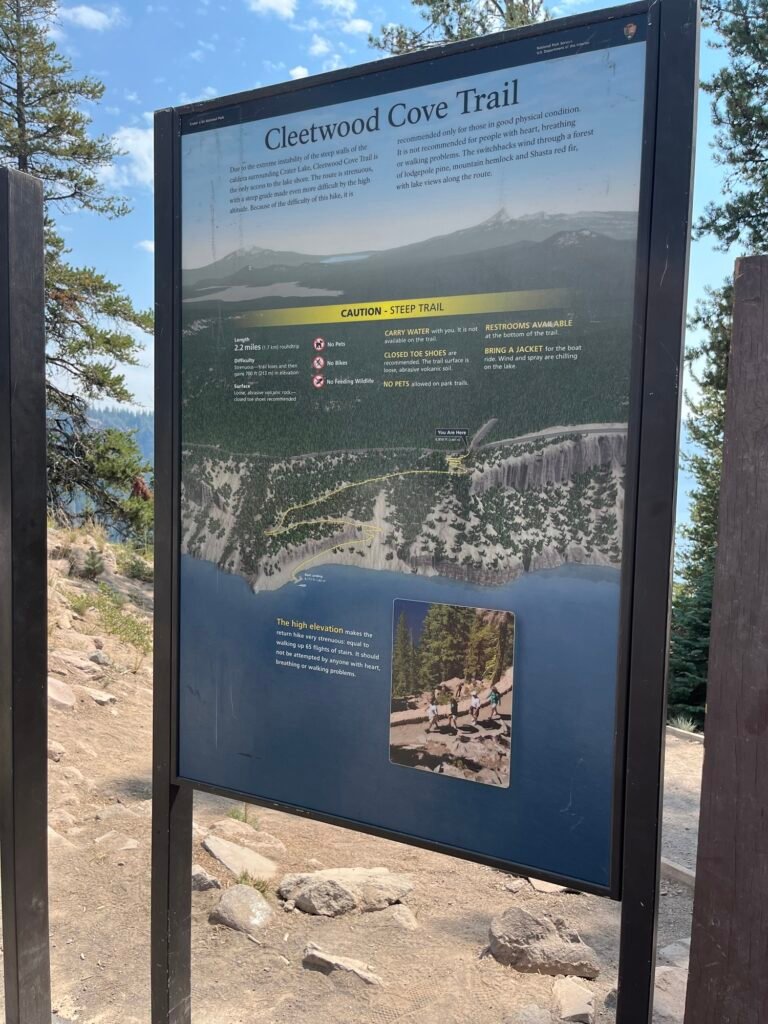
Cleetwood Cove trail is the only trail that takes you down to the lake, making it the most popular. Due to this popularity the parking at the trailhead fills up fast. If you don’t show up early you will likely be having to park on the side of the road and walking to the trail.
The trail is barely over a mile, but it is quite steep, having roughly 700 ft of elevation change. The way down isn’t too bad, but the way back up is sneakily strenuous so be prepared for the climb.
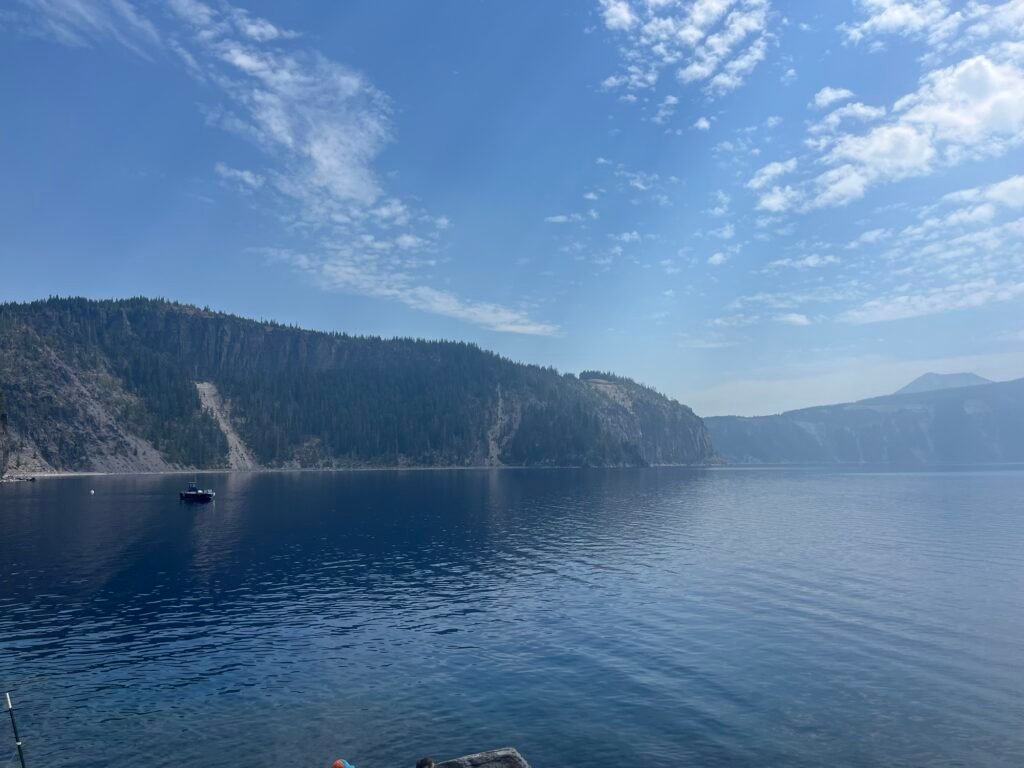
Once at the bottom you can make your way down the rocks to the water and get in! It’s cold year round never really getting above the mid 50’s Fahrenheit. The first step into the lake is a bit of a shock, as you realize just how cold the water really is. The water is exceptionally clear, allowing you to see quite deep. If you’re brave enough there is even a cliff where you can jump off into the lake!
Watchman Peak
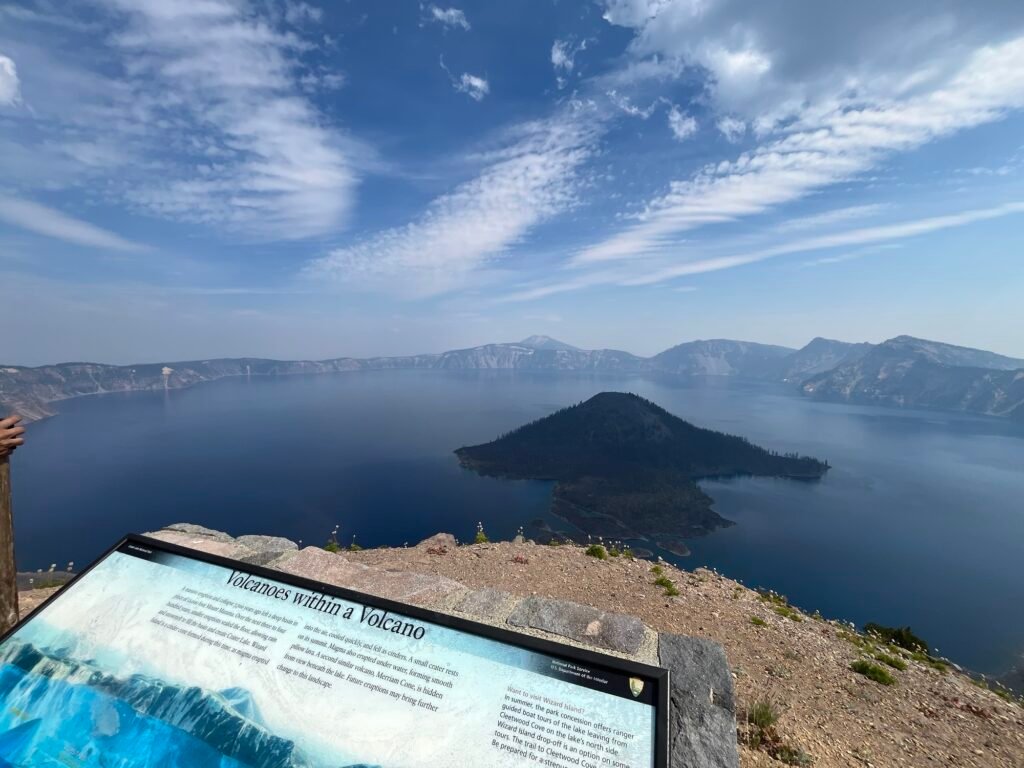
Watchman Peak is an easy to medium difficulty trail along the rim that takes to you an old fire lookout atop the peak. When you get to the top you will be treated to a fantastic panoramic view of the lake and Wizard Island.
Mount Scott
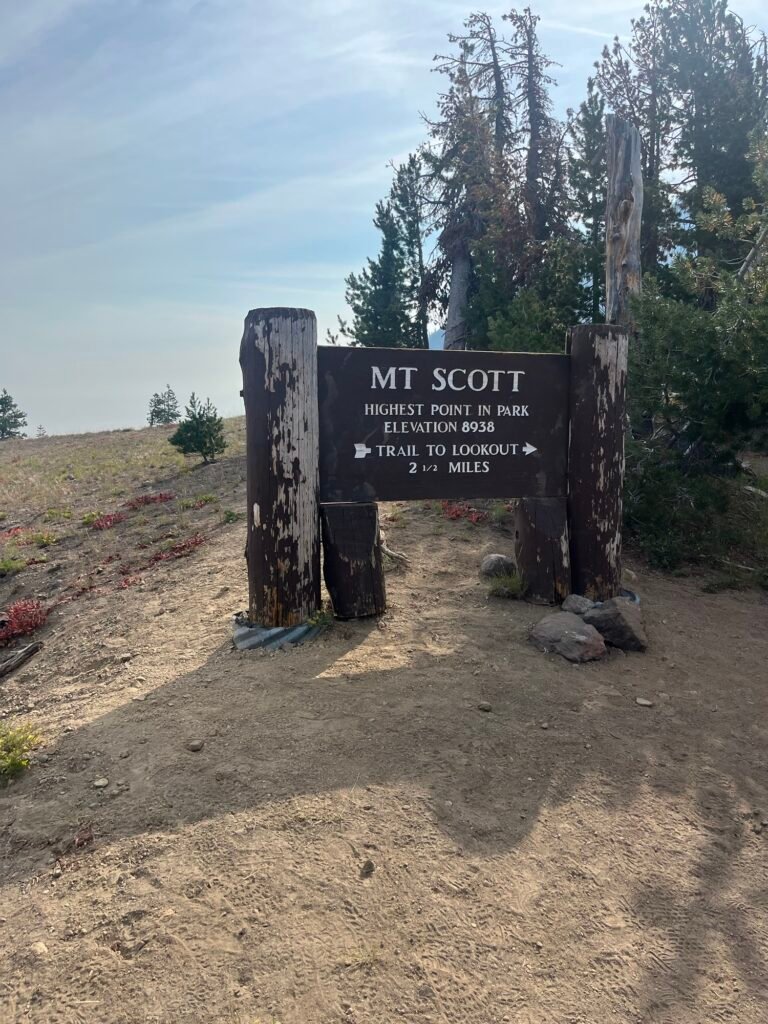
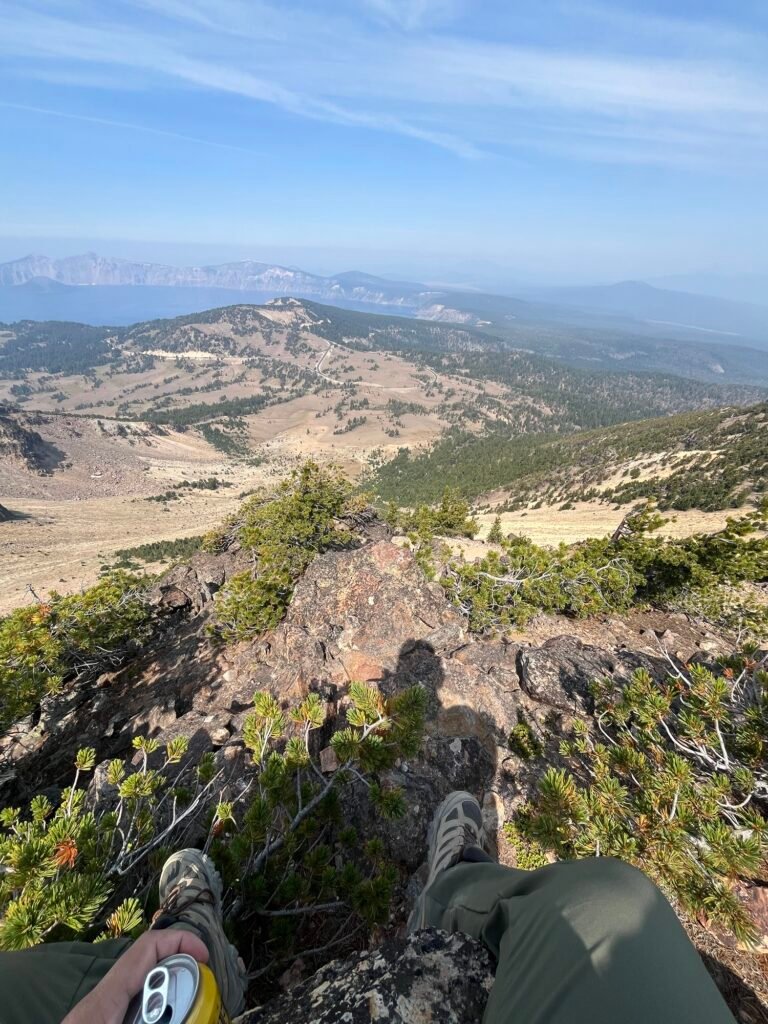
Mount Scott is the highest peak in Crater Lake National Park at almost 9000 ft elevation. The trail is moderately strenuous hike that takes about three hours round trip. The total elevation gain is about 1200 ft, but since it’s spread out over a longer hike it doesn’t feel too bad. At the top you will find excellent views of not just the Crater Lake but the whole park.
When we got to the peak, we stopped and had lunch after taking some photos. We also packed a few beers and I had the wonderful experience of sipping a Pacifico as I took in the sights.
Annie Creek Trail
Annie Creek Trail is an trail that runs along a creek near the south entrance to the park. Overall, it’s a relatively easy hike, except for a small with some steep incline. It has nice forestry running water vibes to it. The trailhead is by the campsites, so if you go camping this is a convenient one.
Wizard Island
Wizard Island is the volcanic island in the lake. You can explore the island but you will need to catch the ferry from Cleetwood Cove. Tickets sell out fast and can be purchased online. They were sold out when we went so we weren’t able to explore the island.
Restrooms in the Park
Most trailheads in the park had two restrooms, which was nice. The downside is that they are composting toilets and I found the cleanliness lacking. This is supposed to be improved as part of the renovations beginning in 2026. Rim Village had multiple restrooms that were much cleaner.
Food in the Park
There are only two options for food in the park, and both are in Rim Village. The first is a cafeteria style shop that sells essentially bar food. It wasn’t outrageously expensive, I would say it’s about stadium prices. I paid $15 for a chicken fingers and fries basket.
The second option is a sit down restaurant attached to the Crater Lake lodge. We didn’t try eating here, but they did have a bar. The Crater Lake Lodge bar had $6 cans and $7 drafts, with a patio where you can enjoy your beer overlooking the lake.
We packed sandwiches with us, and ate that during our hikes. It saved us money and time as Rim Village can get a little hectic.
Where to Stay
We stayed at a campground we found on AirBnB near Klamath Falls. There isn’t much in terms of population centers near the Park so you will likely have to stay about 30 min from the entrance if you don’t stay in the park.
The lodge in Rim Village does have rooms you can book, giving you the most convenient place to explore the park.
It’s also very possible to do a day trip if you are coming from Eugene or Bend.
What to Bring
Due to its elevation Crater Lake National Park is cooler than the surrounding areas year round. Labor Day weekend the high was in the 70’s and it was cool in the mornings. Dress in layers that can be easily removed if you get hot.
This elevation also increases the strength of the UV exposure. Don’t let the cooler weather fool you. You will get sunburned if you don’t use sunscreen. Check out our go to sunscreen here.
Trails were relatively easy terrain so you don’t need expensive hiking boots. You can go with either shorts or pants, depending on the weather.
If you want a full packing list guide for hiking trips along with our recommendations, check out our Hiking Essentials Packing List!
Final Thoughts
Crater Lake National Park is the perfect National Park for a weekend getaway. The smaller size of the park makes it very manageable to see in 2 days. The views are amazing and the hikes weren’t too tough.
If you want to visit and get in the water, you need to hurry. Cleetwood Cove is being closed in 2026 to undergo renovations and will likely be closed for a few years.